
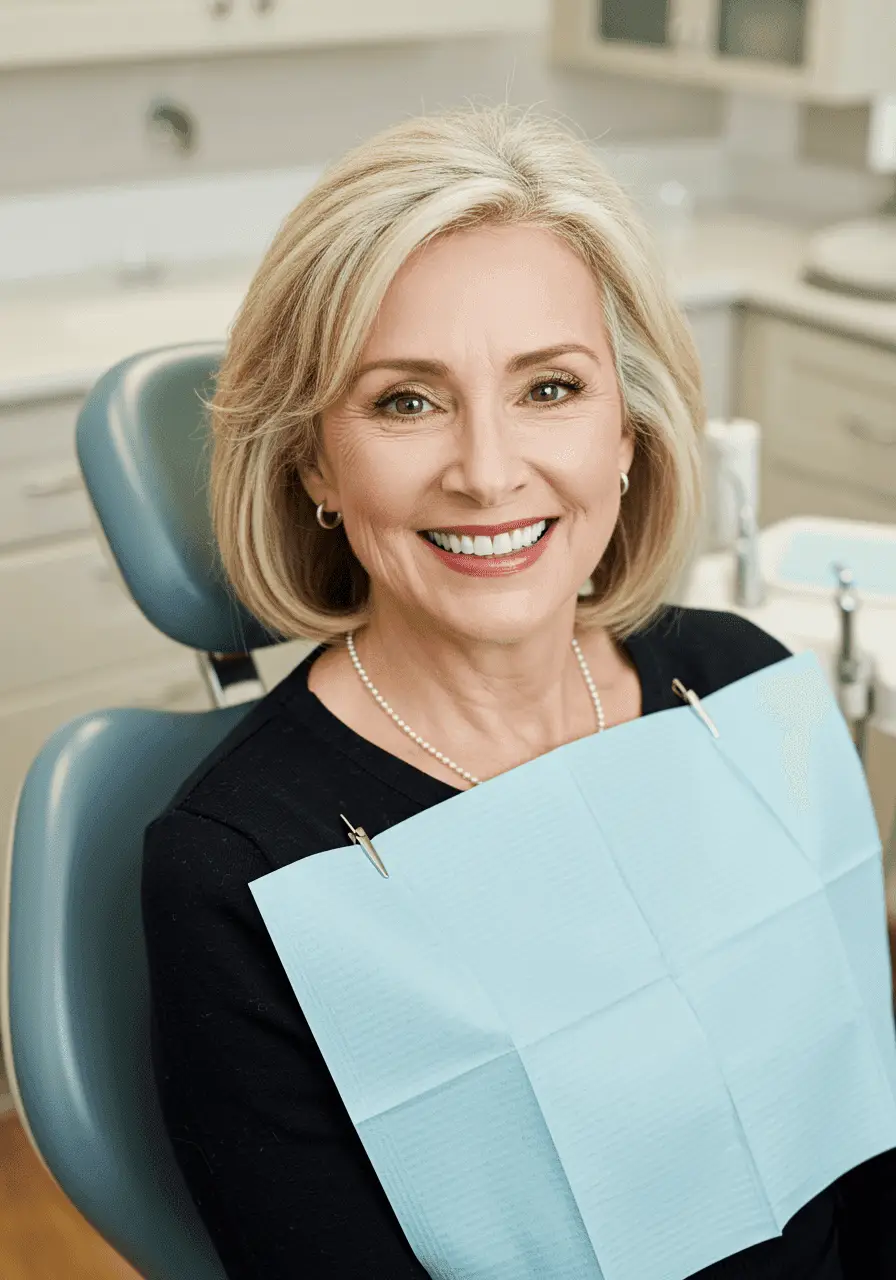
Implant-Supported Dentures in Philadelphia
A fixed, stable solution for patients missing most or all of their teeth. Placed by a board-certified periodontist. Restored by Dr. Leily Razavi.
What Are Implant-Supported Dentures?
Implant supported dentures in Philadelphia at Razavi Dental are a full arch of replacement teeth anchored to dental implants placed in the jawbone. Unlike conventional dentures that rest on the gum surface and rely on adhesives to stay in place, implant-supported dentures are fixed to the implants themselves. They do not slip, do not require adhesive, and restore bite strength to a level that traditional dentures cannot achieve.
The implants also preserve the jawbone. When teeth are lost the jawbone beneath them begins to recede because there is no root stimulating it. Implants replace that stimulation, which keeps the bone intact and prevents the facial changes that occur with long-term denture wear.
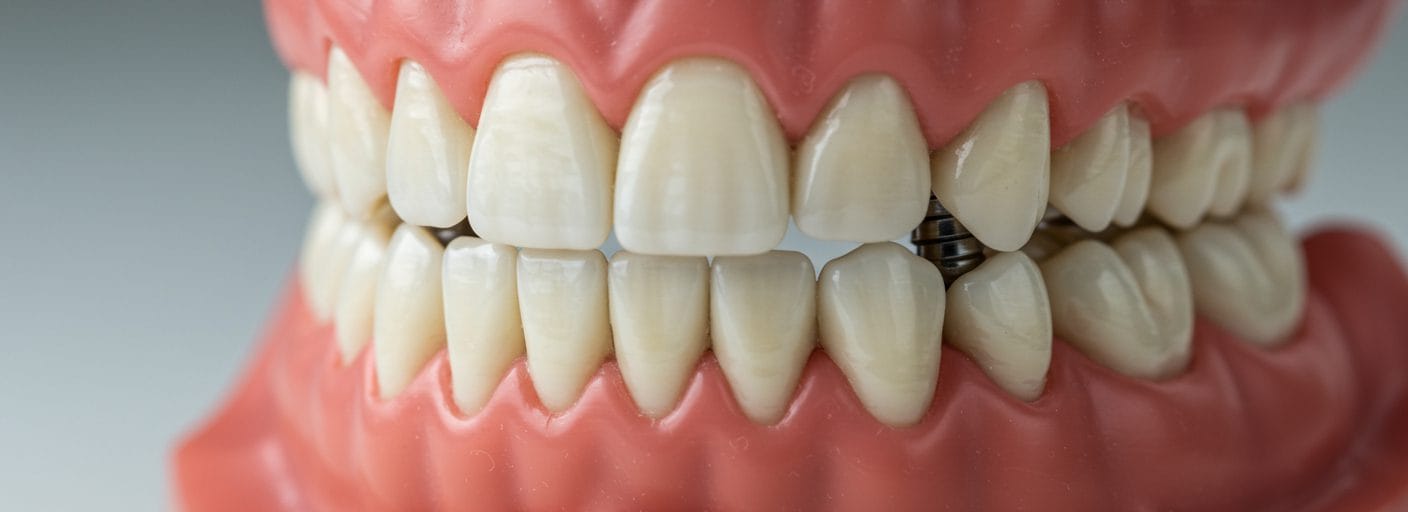
Types of Implant-Supported Dentures
Two main options exist. Dr. Hatam will recommend the right one based on your bone structure, how many teeth are missing, and your goals for the final result.
Removable
Snap-On Dentures
Snap-on dentures attach to implants using a locator attachment system. They are removable for cleaning but snap firmly into place during the day, providing significantly more stability than conventional dentures. Snap-on dentures are supported by two to four implants per arch.
Fixed & Permanent
All-on-4
All-on-4 uses four strategically angled implants per arch to support a full fixed set of replacement teeth. The teeth are not removable. Designed for patients who want a permanent solution that functions as close to natural teeth as possible. The angled placement maximizes contact with available bone, making All-on-4 possible even with significant bone loss. In many cases, temporary teeth can be placed the same day as surgery.
All-on-4 works because the two back implants are angled to make the most of available bone, which often avoids the need for grafting and allows a full arch to be supported on just four implants. For many patients, a temporary fixed set of teeth can be placed the same day as surgery, so you leave with a complete smile while the implants integrate underneath. Once healing is complete, the final custom arch is attached. The result functions much like natural teeth — you brush them normally, eat a normal diet, and they never come out.
Are You a Candidate?
Good candidates for implant-supported dentures are patients who are missing most or all of their teeth on one or both arches and have sufficient jawbone density to support implant placement. Patients with some bone loss may still be candidates after bone grafting.
Missing most or all teeth on one or both arches
Sufficient jawbone density, or eligible for bone grafting first
Frustrated with conventional dentures slipping or requiring adhesive
Systemic conditions like diabetes are often manageable with appropriate coordination
Dr. Hatam evaluates candidacy using 3D digital imaging at the initial consultation. She assesses bone volume, gum health, and overall oral health before recommending a treatment plan.
The Process at Razavi Dental
Treatment is coordinated between Dr. Hatam, who places the implants, and Dr. Razavi, who designs and attaches the final restoration.
1
Consultation with Dr. Hatam
Dr. Hatam reviews your medical history, takes 3D imaging, and develops a treatment plan that outlines every phase from preparation through final restoration.
2
Preparation (If Needed)
If bone grafting is needed it is completed before implant placement. This stage ensures there is a strong foundation for the implants to integrate successfully.
3
Implant Placement
Dr. Hatam places the implants surgically under local anesthesia. A healing period of three to six months follows as the implants integrate with the jawbone. During this time a temporary restoration keeps the area functional.
4
Final Restoration by Dr. Razavi
Once integration is confirmed, Dr. Razavi designs and attaches the final denture. The prosthetic is custom-fabricated to match your facial structure and provide natural-looking, functional results.
How Much Do Implant-Supported Dentures Cost in Philadelphia?
Implant-supported dentures cost more upfront than conventional dentures because the price includes the implants that anchor them — but they last far longer and preserve the jawbone, which makes them more cost-effective over time.
Cost depends mainly on how many implants are used and which system is right for your case. Snap-on dentures, supported by two to four implants per arch, generally range from $6,000 to $15,000 per arch. A fixed All-on-4 restoration, which uses four implants to support a permanent non-removable arch, generally ranges from $20,000 to $35,000 per arch. Cases that need bone grafting beforehand sit at the higher end.
The exact figure depends on the number of implants, whether grafting is required, and the materials chosen for the final restoration. Razavi Dental provides a clear written estimate after Dr. Hatam’s consultation and 3D imaging, and accepts CareCredit financing so the cost can be spread into monthly payments.
Why Choose Razavi Dental

Dr. Leily Razavi
Cosmetic & Restorative Dentist
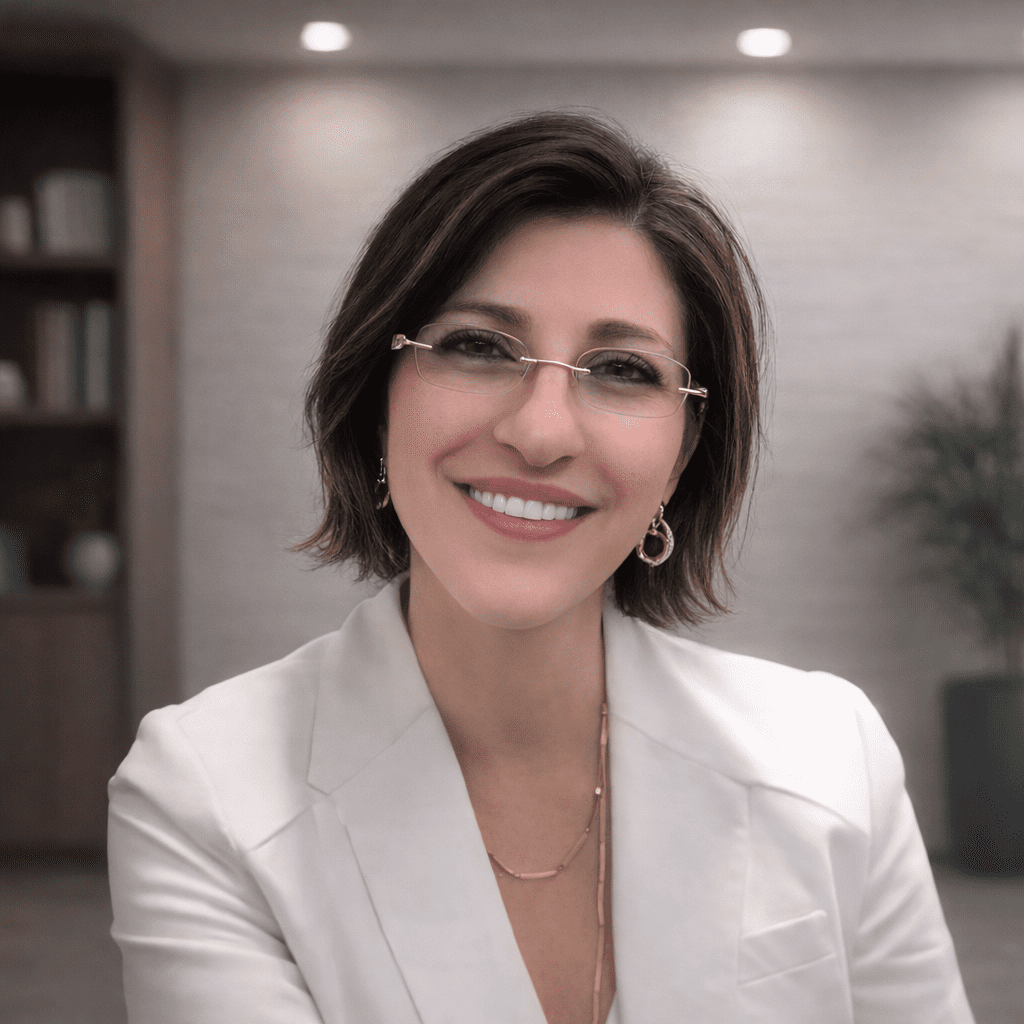
Dr. Pouya Hatam
Board-Certified Periodontist & Implant Surgeon
Frequently Asked Questions
How long do implant-supported dentures last?
The implants themselves are designed to be permanent. The denture prosthetic may need adjustment or replacement over time depending on wear and changes in the jawbone. With proper care and regular exams, implant-supported dentures can last 15 to 20 years or more.
Does the procedure hurt?
Implant surgery is performed under local anesthesia. Most patients report the procedure is less uncomfortable than they anticipated. Post-surgical soreness is manageable with over-the-counter pain relief for a few days.
Can I eat normally with implant-supported dentures?
Yes. Implant-supported dentures restore significantly more bite strength than conventional dentures. Most patients can eat a normal diet without restriction once fully healed.
What is the difference between snap-on dentures and All-on-4?
Snap-on dentures are removable and supported by two to four implants. All-on-4 is fixed and non-removable, supported by four angled implants per arch. All-on-4 provides greater stability and a more permanent result. Dr. Hatam will recommend the appropriate option based on your bone structure and goals.
How much do implant-supported dentures cost?
Snap-on dentures supported by two to four implants generally range from $6,000 to $15,000 per arch, while a fixed All-on-4 arch generally ranges from $20,000 to $35,000. Razavi Dental provides a written estimate after consultation and accepts CareCredit financing.
How long does the whole process take?
From the first consultation to the final restoration, treatment typically takes three to six months, driven mainly by the healing period while the implants integrate with the jawbone. For qualifying patients, temporary teeth can be placed the same day as implant surgery.
Are implant-supported dentures better than regular dentures?
For patients who qualify, yes — they don’t slip, need no adhesive, restore far more bite strength, and preserve the jawbone, which conventional dentures cannot do. Conventional dentures remain a good option for patients who aren’t implant candidates. Dr. Hatam evaluates candidacy with 3D imaging at the consultation.
Ready to Replace Your Missing Teeth?
Contact Razavi Dental to schedule a consultation with Dr. Hatam in Center City Philadelphia.