
Gingivectomy in Philadelphia
Laser and traditional gum reshaping with Dr. Pouya Hatam, a board-certified periodontist and University of Pennsylvania faculty member, at Razavi Dental in Center City.
If your teeth look short, your smile shows more gum than tooth, or your gums have overgrown the edges of your teeth, a gingivectomy in Philadelphia can restore the right proportions. At Razavi Dental in Center City, the procedure is performed by Dr. Pouya Hatam, a periodontist who has spent her career on the soft tissue and bone that frame the teeth and who has trained periodontists at UPenn for over two decades. Whether the goal is cosmetic, functional, or part of treating gum disease, your treatment is planned around your specific gumline and done with a steady, conservative hand.
What Is a Gingivectomy?
A gingivectomy is the precise surgical removal of excess or diseased gum tissue. The word comes from the Latin “gingiva,” meaning gum tissue, and the suffix “-ectomy,” meaning to remove. By trimming away tissue that is covering too much of the tooth or harboring infection, the procedure reveals more of the natural tooth, reshapes the gumline, and creates a contour that is easier to keep clean and healthier long term.
It is one of the oldest and most reliable procedures in periodontics, and in experienced hands it is quick, predictable, and performed under local anesthesia in a single visit for most cases. What separates a good outcome from a poor one is judgment: knowing exactly how much tissue to remove, where the new gumline should sit, and whether the case actually needs a gingivectomy or a different procedure entirely. That judgment is where a periodontist with Dr. Hatam’s training matters.
Reasons You Might Need a Gingivectomy
A Gummy Smile or Short-Looking Teeth (Cosmetic)
When teeth look short, square, or buried, it is often because gum tissue is covering too much of the natural tooth, not because the teeth themselves are small. A cosmetic gingivectomy reveals the full tooth, balances the gumline, and lets your real smile show through. This is one of the highest-impact cosmetic procedures available because the change is dramatic and immediate, and it costs a fraction of full veneers. For patients planning veneers or a smile makeover, gingivectomy is often performed first so the new tooth proportions are based on the corrected gumline.
Gum Overgrowth from Medication
Gum Disease and Deep Pockets
As periodontal disease progresses, the gums can pull away from the teeth and form deep pockets where bacteria collect and where a toothbrush cannot reach. In select cases, a gingivectomy removes the diseased pocket wall, eliminates the pocket, and gives the gum tissue a clean, shallow contour that you and your hygienist can actually maintain. For more advanced disease, Dr. Hatam may recommend osseous surgery or LANAP laser therapy instead, and she will tell you directly which approach fits your case.
Access for Restorative Dentistry
Sometimes a tooth is broken or decayed below the gumline, and the restorative dentist needs more tooth structure exposed to place a filling or crown correctly. The procedure can uncover the margin so the final restoration seats properly and lasts.
Laser Gingivectomy vs. Traditional Gingivectomy
Dr. Hatam performs gingivectomy with either a scalpel or a dental laser, depending on what the case calls for.
Traditional gingivectomy uses a fine surgical blade to excise and bevel the tissue. It is time-tested, precise, and ideal for many cases.
Laser gingivectomy uses focused light energy to remove tissue while sealing small blood vessels as it works. The advantages patients notice most are less bleeding during the procedure, better visibility for the surgeon, usually no sutures, and a faster, more comfortable recovery. The laser is especially well suited to smaller cosmetic cases and gummy smile reshaping, where precision at the gumline is everything.
Dr. Hatam chooses the technique based on the amount of tissue involved, the reason for the procedure, and your overall periodontal health rather than a one-size-fits-all default.
Gingivectomy vs. Gingivoplasty vs. Crown Lengthening
These three procedures are related and often confused, and getting the diagnosis right is the difference between a result that lasts and one that relapses.
A gingivectomy removes gum tissue. A gingivoplasty reshapes and contours the remaining gum tissue to a natural, scalloped line, and the two are frequently done together in the same visit.
Crown lengthening is different and more involved. When a gummy smile is caused not just by excess gum but by bone that sits too close to the edge of the teeth, simply trimming the gum will let it grow back. In those cases the bone must be gently recontoured as well, which is crown lengthening, not a gingivectomy alone. Dr. Hatam evaluates the bone level before treatment so the right procedure is chosen the first time.
The Gingivectomy Procedure at Razavi Dental
- Evaluation and planning. Dr. Hatam measures your gum tissue, checks pocket depths and bone levels, and maps where the new gumline should sit for a balanced, healthy result.
- Anesthesia. The area is fully numbed with local anesthetic so the procedure is comfortable.
- Tissue removal. Excess or diseased tissue is removed with a scalpel or laser, and the gumline is shaped to a natural contour.
- Finishing. In most cases no sutures are needed, particularly with the laser. A protective dressing may be placed over the site if appropriate.
- Review. You leave with clear aftercare instructions, and a short follow-up visit, usually about a week later, confirms the tissue is healing well.
Recovery and Aftercare
Recovery from a gingivectomy is straightforward for most patients. The treated area is typically sore for 24 to 48 hours, and any discomfort is managed easily with over-the-counter or prescribed medication. A soft diet for a few days, gentle cleaning around the site, and avoiding anything that disturbs the area lets the tissue heal smoothly. The gums generally finish healing within one to two weeks, settling into their new shape. Dr. Hatam reviews exactly what to expect and what to avoid before you leave, so there are no surprises.
When the reason for the overgrowth is addressed, results are usually permanent. Tissue can regrow if a causative medication continues and oral hygiene lapses, which is why a maintenance plan matters in those cases.
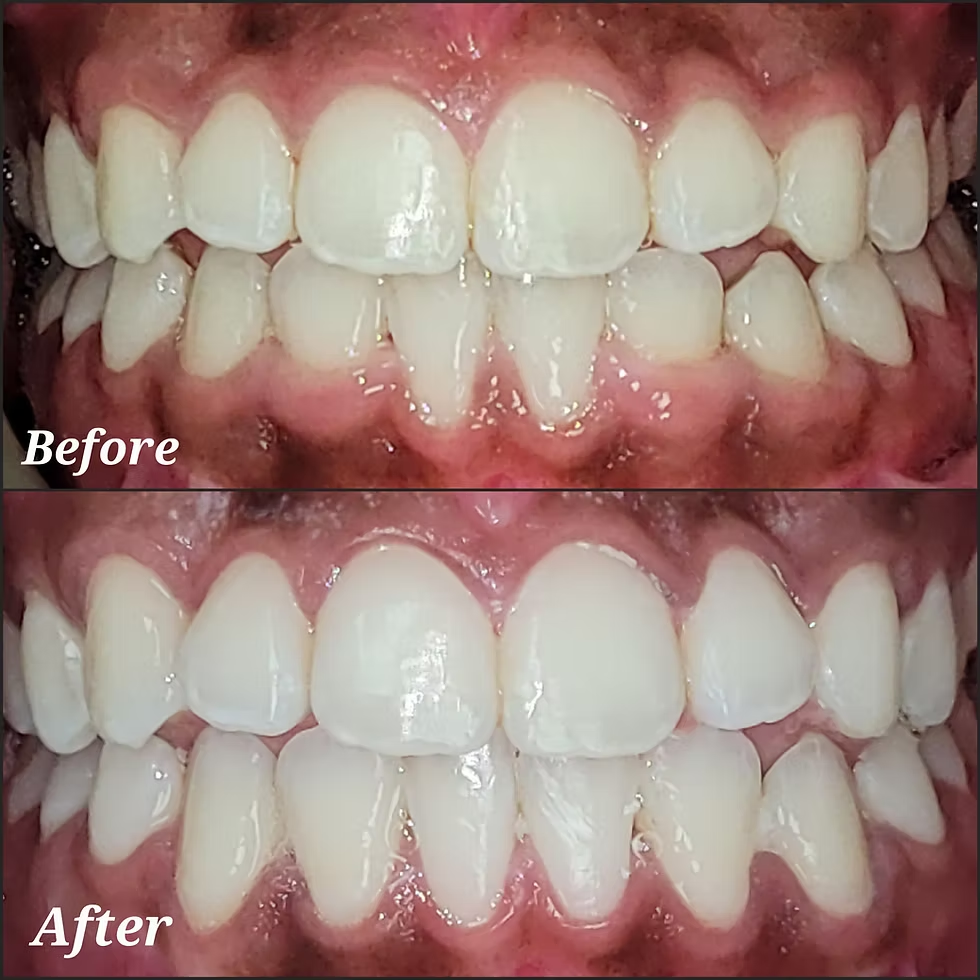
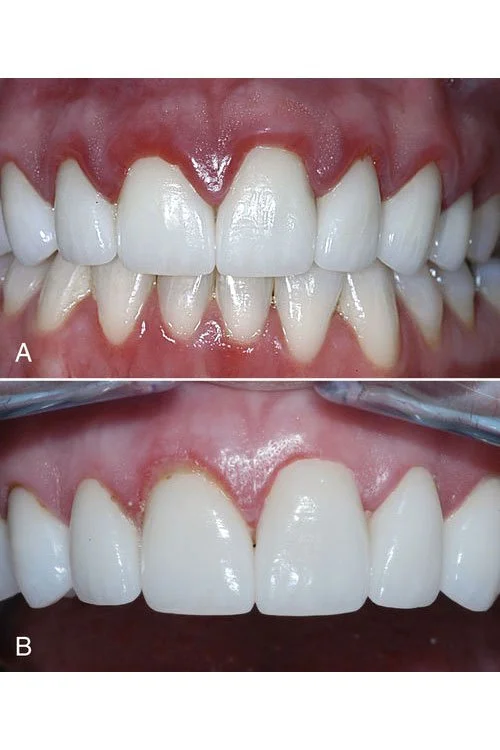
Gingivectomy Before and After
Patients considering a gingivectomy almost always want to see the difference it makes, and the change is often dramatic. Before treatment, teeth can look short, square, or buried under excess gum, with an uneven gumline that throws the whole smile out of balance. Afterward, more of the natural tooth is revealed, the gumline follows a smooth, symmetrical curve, and teeth that looked small suddenly look proportioned.
The before and after contrast is most striking in two situations. In gummy smile correction the change is purely cosmetic and visible immediately. In medication-related gum overgrowth, reclaiming the tooth surface also makes the mouth far easier to keep clean. Because Dr. Hatam maps the new gumline before any tissue is removed, the after is a deliberate, planned result rather than a guess.
During your consultation at Razavi Dental, Dr. Hatam can show you what your own before and after is likely to look like, based on your gumline and the reason for treatment.
How Much Does a Gingivectomy Cost in Philadelphia?
The cost of a gingivectomy depends on how many teeth are involved, whether one or both arches are treated, and whether the procedure is cosmetic or part of treating gum disease. Treatment limited to one or two teeth costs considerably less than reshaping an entire smile line.
Cosmetic gingivectomy for a gummy smile is generally an out-of-pocket cosmetic expense, while a gingivectomy performed to treat periodontal disease is often partially covered by dental insurance. Razavi Dental reviews your specific case and coverage before treatment so you have a clear number in advance. Financing options are available for cosmetic cases.
Are You a Candidate for a Gingivectomy?
You may be a candidate if any of the following apply:
- Your smile shows more gum than you would like, and your teeth look short or square
- Your gums have overgrown your teeth, possibly related to a medication you take
- A dentist has told you that you have deep gum pockets that are hard to keep clean
- You have a broken or decayed tooth that needs gum tissue removed before it can be restored
- You are planning veneers or a cosmetic change and want your gumline corrected first
Why Choose Dr. Pouya Hatam for Your Gingivectomy
Gumline surgery is about millimeters, and the surgeon’s eye is everything. Dr. Hatam is a board-certified periodontist who earned her DMD and her Certificate in Periodontics at the University of Pennsylvania School of Dental Medicine, where she went on to serve on the faculty and to train the next generation of periodontists. She was named a Top Periodontist by Philadelphia Magazine and has received teaching awards from UPenn for her work in periodontal education. Patients are referred to her by other dentists across Philadelphia precisely for procedures like this, where precision and judgment determine the result.
At Razavi Dental in Center City, she works alongside Dr. Razavi so that cosmetic and restorative work can be coordinated seamlessly with your gum treatment, all under one roof. The practice sits on South Street and treats patients from across Philadelphia, including Queen Village, Bella Vista, Society Hill, Washington Square West, Rittenhouse, and the surrounding neighborhoods. For most patients seeking a gingivectomy in Philadelphia, it is a short trip to a periodontist with genuine academic credentials.
Ready to reshape your gumline? Schedule a consultation with Dr. Hatam at Razavi Dental in Philadelphia.
Gingivectomy FAQ
Is a gingivectomy painful?
No. The procedure is done under local anesthesia, so you do not feel it. Afterward the area is usually sore for a day or two, and any discomfort is easily managed with medication. Laser cases tend to be the most comfortable.
How long does gingivectomy recovery take?
Most patients are comfortable within a couple of days and the gums finish healing within one to two weeks. A soft diet and gentle care of the area for the first few days is usually all that is needed.
Does a gingivectomy require stitches?
In most cases, no. This is especially true with laser gingivectomy, which often seals the tissue as it works. Larger cases may occasionally need a protective dressing.
What is the difference between a gingivectomy and crown lengthening?
A gingivectomy removes only gum tissue. Crown lengthening also reshapes the underlying bone and is needed when bone sits too close to the edge of the teeth. Dr. Hatam evaluates your bone level first so the correct procedure is chosen and the result does not relapse.
Will my gums grow back after a gingivectomy?
When the underlying cause is addressed, results are usually permanent. Tissue can regrow if a causative medication continues and oral hygiene is poor, which is why maintenance matters in those cases.
Is laser gingivectomy better than traditional?
Each has its place. Laser gingivectomy offers less bleeding, usually no sutures, and a faster recovery, and is ideal for cosmetic gumline work. Dr. Hatam selects the technique that fits your specific case.
Is a gingivectomy covered by insurance?
A gingivectomy performed to treat gum disease is often partially covered. A cosmetic gingivectomy for a gummy smile is generally out of pocket. Razavi Dental reviews your coverage before treatment.
Can I see gingivectomy before and after results?
Yes. The difference is usually most dramatic for gummy smile correction and for medication-related gum overgrowth. During your consultation Dr. Hatam will show you what to expect for your specific gumline, and you can view before and after examples of her work.
Who performs gingivectomy at Razavi Dental?
Dr. Pouya Hatam, a board-certified periodontist and UPenn faculty member, performs all gingivectomy and periodontal surgery at Razavi Dental.
Looking for a Gingivectomy in Philadelphia?
Call Razavi Dental at (215) 996-7030 for same-day care in Center City.