
Dental Crowns and Bridges in Philadelphia
Custom restorations that match your natural teeth so precisely most people cannot tell the difference. Zirconia and porcelain options available.
Dental Crowns Philadelphia
A dental crown Philadelphia patients receive at Razavi Dental is a custom-made caps that fit over the entire visible surface of a tooth, restoring it to its original shape, size, and function. Zirconia and porcelain options are available, each matched to your surrounding teeth precisely.
Types of Dental Crowns
Not all crowns are the same. The material makes a real difference in both appearance and durability.
Zirconia
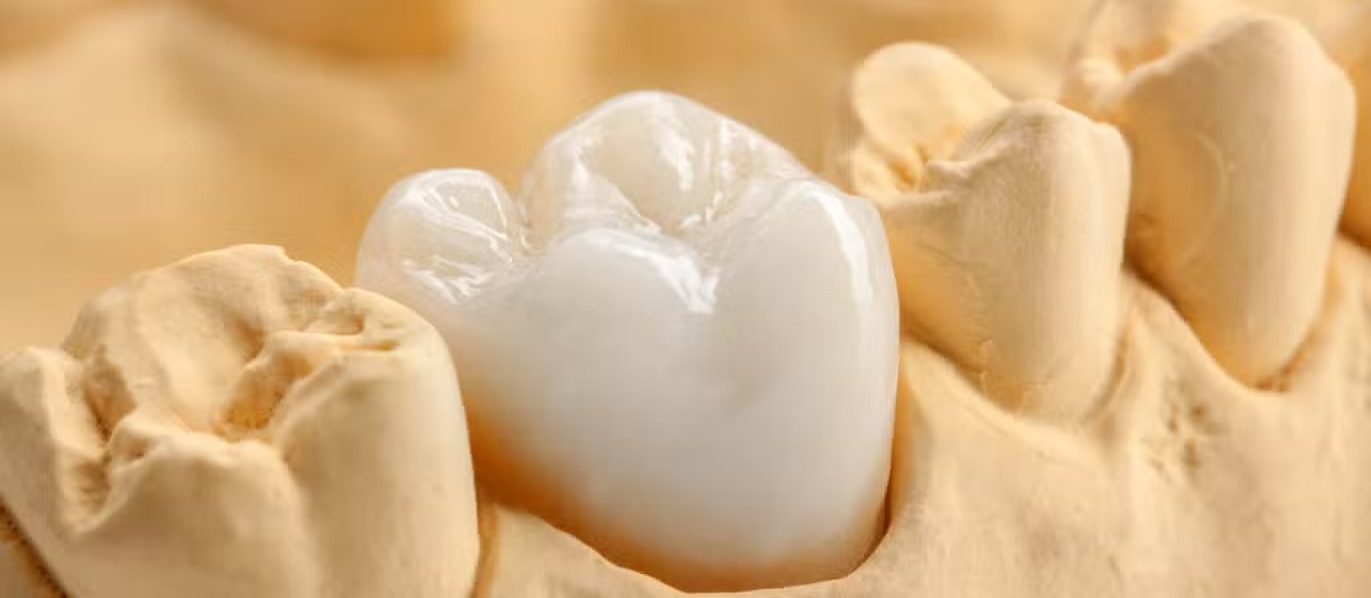
The preferred option at Razavi Dental. Exceptionally strong, resistant to chipping, and translucent enough to mimic the light-reflecting properties of natural tooth enamel. Works well for both front and back teeth. Contains no metal, so no gray line at the gum over time.
Full Porcelain
Porcelain crowns Philadelphia patients choose for front teeth prioritize appearance above all. Full porcelain matches natural tooth color very closely but is slightly less durable than zirconia under heavy bite pressure.
Porcelain-Fused-to-Metal
A metal substructure with a porcelain outer layer. Durable and used in dentistry for decades. The drawback is that the metal base can show as a dark line at the gumline as the gum recedes over time.
Dr. Razavi will recommend the right material based on the location of the tooth, your bite, and your goals for the final appearance.

Dr. Razavi and the Razavi Dental Difference
Dr. Leily Razavi has been named Philadelphia Magazine Top Dentist six consecutive years, from 2020 through 2025. She completed her Doctor of Dental Surgery at the University of Toronto and her general dentistry residency at Albert Einstein Medical Center in Philadelphia. She has served on the clinical faculty at the University of Pennsylvania for 15 years.
Crown restorations at Razavi Dental are designed with the same attention to detail Dr. Razavi brings to cosmetic cases. Every crown is matched to the surrounding teeth in color, translucency, and shape. The laboratory work is performed by one of the top dental ceramists in the region.
Dental Crowns vs Veneers
When considering dental crowns, Philadelphia patients often ask how they compare to veneers. Both are used in smile makeovers but they serve different purposes. A veneer covers only the front surface of a tooth and requires minimal removal of tooth structure. It is the right choice when the underlying tooth is healthy and the goal is cosmetic.
A crown covers the entire tooth. It is the right choice when the tooth has been structurally compromised by decay, a crack, or a large existing filling that can no longer hold. If you are unsure which is appropriate for your situation, Dr. Razavi will evaluate the tooth and give you a clear recommendation at your consultation. Learn more about porcelain veneers at Razavi Dental.
What Is a Dental Bridge?
A dental bridge replaces one or more missing teeth by anchoring to the teeth on either side of the gap. For patients getting a dental bridge in Philadelphia, Razavi Dental uses crowns on the anchoring teeth with the replacement tooth suspended between them. The result is a fixed restoration that fills the space and restores the ability to chew normally.
Bridges are a good option when the adjacent teeth already need crowns or when a dental implant is not the right fit for a particular patient. For patients who are good candidates, dental implants in Philadelphia offer a more permanent solution that does not involve the adjacent teeth.
When Is a Crown Necessary?
A crown is typically needed when:
- A tooth has a crack that extends below the gumline
- Decay has destroyed enough of the tooth that a filling cannot restore it
- A root canal has been completed and the tooth needs protection
- A tooth has worn down significantly from grinding
- A crown is needed to anchor an implant restoration or support a dental bridge
If a crown chips, cracks, or falls off, contact our emergency dentist in Philadelphia for same-day care.
Dental Crowns Philadelphia and Implants
When a tooth is missing entirely, an implant replaces the root and a dental crown in Philadelphia is placed on top to restore the visible portion. At Razavi Dental, Dr. Pouya Hatam places the implant as a board-certified periodontist and UPenn faculty member, and Dr. Razavi designs and places the final crown. The two specialists work together in one practice so the crown is designed from the start to integrate with the implant. For patients replacing multiple teeth, dental crowns are also used to anchor bridges or support full arch restorations.
The two specialists work together in one practice, which means the crown is designed from the start to work with the implant rather than being added as an afterthought. For patients replacing multiple teeth, dental crowns are also used to anchor bridges or support full arch restorations. Learn more about dental implants in Philadelphia at Razavi Dental.
The Crown Procedure at Razavi Dental
Getting dental crowns in Philadelphia at Razavi Dental is a two-appointment process.
1
First Appointment
Dr. Razavi prepares the tooth by removing a thin layer of enamel to make room for the crown. She takes a digital impression of the prepared tooth and places a temporary crown to protect it while the permanent one is fabricated. The impression is sent to a dental laboratory where the final crown is custom-made to the specifications Dr. Razavi has designed.
2
Second Appointment
Typically two weeks later, the temporary crown is removed and the permanent crown is checked for fit, bite, and appearance before being permanently cemented in place.
What to Expect After Your Crown Preparation Appointment
The preparation appointment involves removing a small amount of enamel and placing a temporary crown while your permanent one is being fabricated. Some sensitivity and mild gum tenderness in the days following is normal and expected.
Your temporary crown is designed to protect the tooth for approximately two weeks. It is not as strong as your permanent crown. Avoid chewing hard or sticky foods on that side — ice, hard candy, gum, and chewy foods can dislodge a temporary. When flossing around a temporary crown, slide the floss out from the side rather than lifting it up through the contact, which can pull the temporary loose.
If your temporary crown comes off before your permanent appointment, call the office promptly. Do not leave the tooth unprotected. In most cases the temporary can be recemented the same day. If your bite feels uneven after the anesthesia wears off, call the office — this is a simple adjustment and should not be left.
Sensitivity typically resolves once the permanent crown is placed. If sensitivity worsens after the permanent crown is cemented or does not improve within two weeks, contact Razavi Dental for a follow-up evaluation.
How Long Do Dental Crowns Last?
One of the most common questions about dental crowns Philadelphia patients ask is how long they last. Zirconia and porcelain options typically hold up 15 to 25 years with proper care. The crown itself does not decay, but the tooth underneath can. Consistent brushing, flossing around the crown margin, and regular exams at Razavi Dental are what determine how long a crown holds up. Patients who grind their teeth may be recommended a night guard to protect their crowns from excessive wear.
Dental Crowns Philadelphia: What Do They Cost?
The cost of dental crowns Philadelphia patients pay typically ranges from $1,200 to $2,500 per tooth. Zirconia crowns are at the higher end of that range because of the material quality and the precision required to fabricate them. Full porcelain and porcelain-fused-to-metal crowns generally fall in the mid range.
Dental insurance covers crowns when they are placed for functional reasons such as decay, fracture, or following a root canal. Coverage varies by plan but typically runs 50 percent of the procedure cost after the deductible. Cosmetic crowns placed purely for appearance are generally not covered.
Razavi Dental will verify your insurance benefits before treatment and provide a clear cost estimate so there are no surprises. For patients without insurance or with coverage gaps, financing options are available to spread the cost over time.
Dental Crowns vs Dental Bridges: Which Is Right for You?
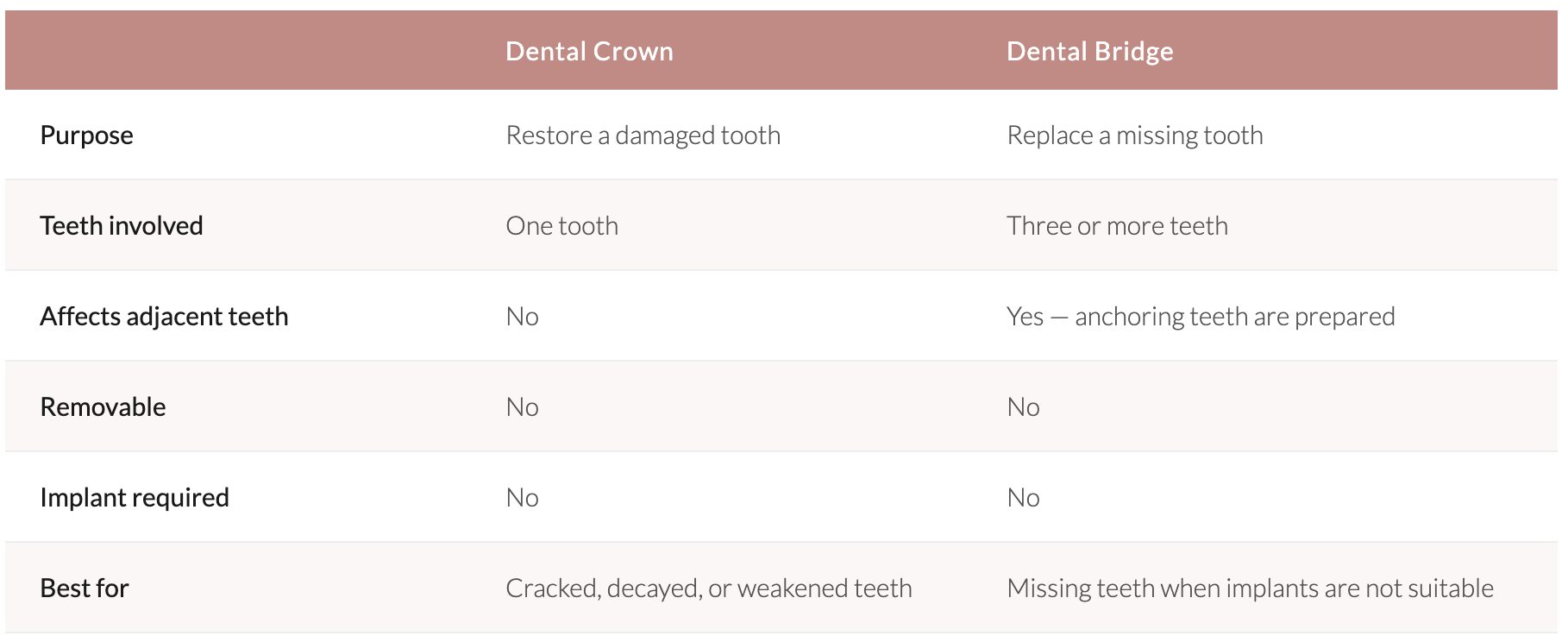
A crown restores a tooth that is still present but damaged. A bridge replaces a tooth that is gone. If you are missing a tooth and considering your options, dental implants in Philadelphia are worth discussing at your consultation — they replace the tooth root as well as the crown and do not involve the adjacent teeth.
Potential Complications to Know About
Getting a dental crown is a routine procedure and most patients have no issues. That said, a few things can occur over the life of a crown that are worth knowing in advance.
Sensitivity to temperature or bite pressure is the most common short-term response. It usually resolves on its own within a few weeks of placement. If it persists or worsens, call the office.
Decay at the margin is possible over time. The crown itself does not decay, but the natural tooth structure at the edge where the crown meets the gumline can. Consistent brushing at the gumline and regular exams catch this early before it becomes a larger problem.
A loose crown can develop years after placement as the cement gradually washes out. If a crown feels loose or shifts when you bite, call the office promptly. A loose crown left in place allows bacteria to reach the tooth underneath.
Bite discomfort after placement usually means a minor adjustment is needed. This is a quick in-office fix and should be addressed rather than waited out.
If a crown chips, cracks, or comes off entirely, contact our emergency dentist in Philadelphia for same-day evaluation.
Frequently Asked Questions
Does getting a crown hurt?
The preparation appointment is done under local anesthesia. Most patients feel pressure during the procedure but not pain. Some sensitivity in the days following is normal and resolves on its own.
Can a crown fall off?
It is uncommon but possible, usually due to the cement washing out over time or decay developing at the margin. If a crown comes loose, call the office promptly. Do not leave the tooth unprotected.
Is a crown the same as a cap?
Yes. Crown and cap refer to the same restoration. Crown is the clinical term.
How do I know if I need a crown or a filling?
A filling is appropriate when the decay or damage is limited and enough healthy tooth structure remains to support it. When the damage is more extensive, a crown is the more stable long-term solution. Dr. Razavi will show you the tooth and explain exactly what she sees before recommending anything.
Where can I get dental crowns in Philadelphia?
For a dental crown Philadelphia patients trust, Razavi Dental offers crowns, bridges, and full restorations in Center City. Call (215) 996-7030 to schedule a consultation.
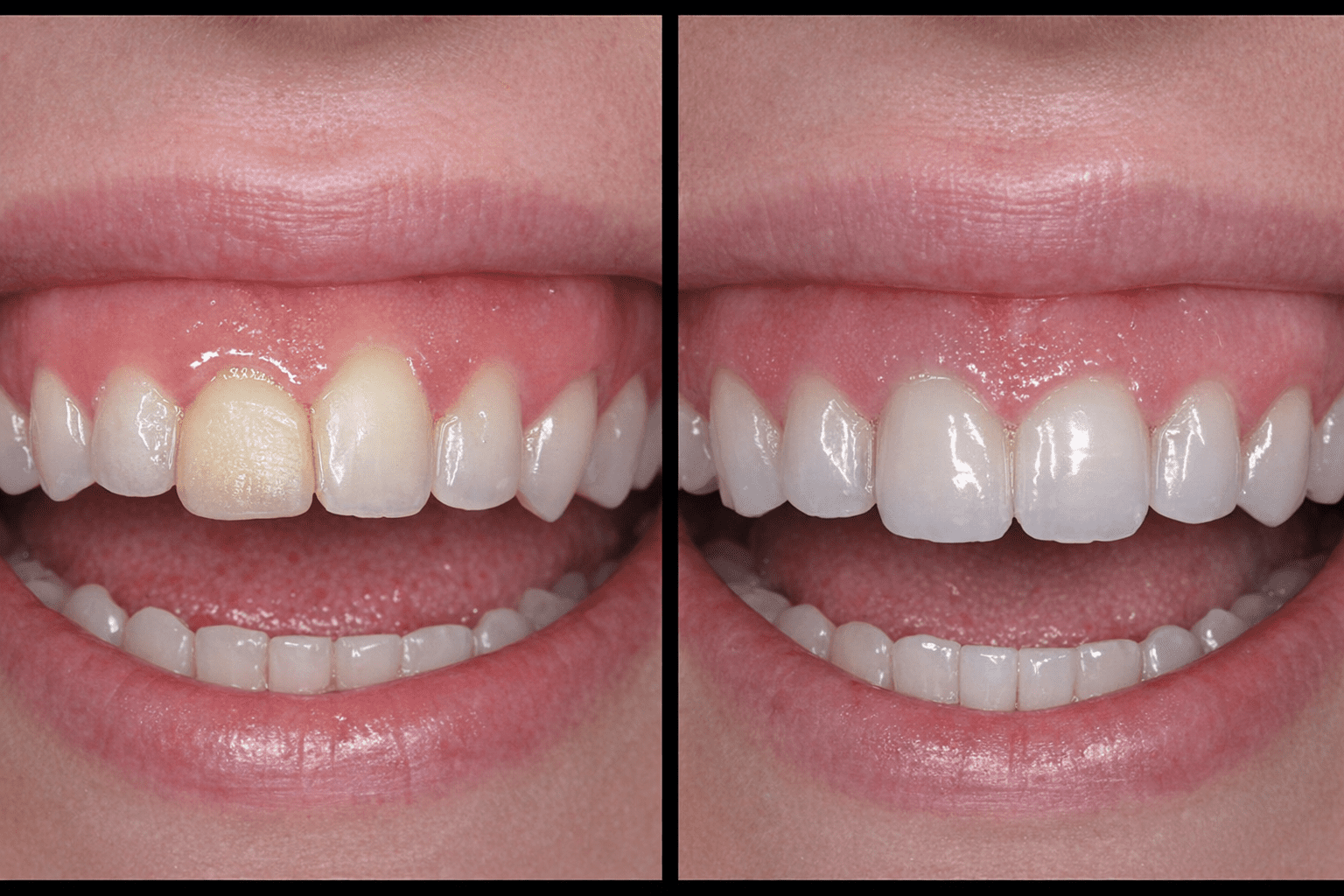
Crown restoration by Dr. Leily Razavi, Razavi Dental Philadelphia
Not sure whether you need a crown or a veneer? Read our full comparison: Crown vs Veneer: What Is the Difference?
Restore Your Smile
Razavi Dental offers dental crowns Philadelphia patients trust, plus bridges and full restorations, in Center City Philadelphia. If you are unsure which is appropriate, read our full crown vs veneer comparison or speak with Dr. Razavi at your consultation.