
TMJ Treatment in Philadelphia
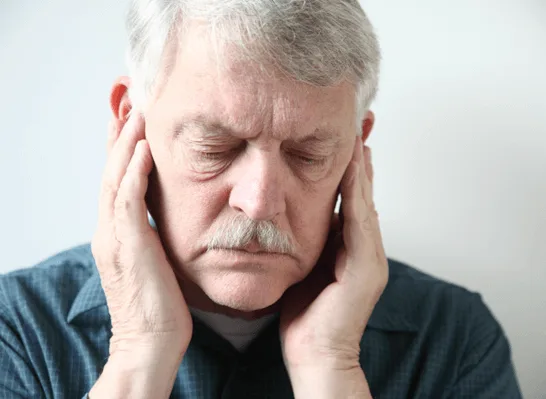
Relief from jaw pain, clicking, and headaches with custom TMJ therapy from Dr. Leily Razavi at Razavi Dental in Center City.
If your jaw aches, clicks, or locks, if you wake up with headaches or a sore face, or if you catch yourself clenching through the day, you may have a TMJ disorder. TMJ treatment in Philadelphia starts with finding out why the joint and muscles are under strain, then relieving that strain with conservative, reversible therapy before anything invasive is ever considered. At Razavi Dental in Center City, Dr. Leily Razavi diagnoses the source of the problem and treats it with custom oral appliance therapy and bite correction, the approaches with the strongest track record and the lowest risk.
What Is TMJ Disorder?
The temporomandibular joints are the two hinges that connect your lower jaw to your skull, just in front of each ear. They are among the most used joints in the body, working every time you talk, chew, or yawn. A TMJ disorder, sometimes called TMD, is any problem with these joints or the muscles that move them. When the joint, its cushioning disc, or the surrounding muscles are overworked or misaligned, the result is pain, restricted movement, and the clicking or popping many people notice first.
TMJ disorders are common, often manageable, and rarely require surgery. The key is an accurate diagnosis, because jaw pain can come from the muscles, the joint itself, the bite, or a combination, and each points to a different treatment.
Symptoms of TMJ Disorder
You may have a TMJ disorder if you experience one or more of these:
- Pain or tenderness in the jaw, face, or around the ears
- Clicking, popping, or grating sounds when you open or close your mouth
- A jaw that locks, catches, or feels stuck
- Frequent headaches, especially in the temples
- Earaches or a feeling of fullness in the ears with no infection
- Difficulty or discomfort when chewing
- Tightness or pain in the neck and shoulders
- Worn, flattened, or sensitive teeth from grinding
- Waking up with a sore or tired jaw
What Causes TMJ Problems?
TMJ disorders usually have more than one cause working together. The most common are teeth grinding and clenching, often during sleep and frequently driven by stress, which overloads the joint and muscles. A misaligned bite can force the jaw into a strained position. Other contributors include displacement of the cushioning disc inside the joint, arthritis affecting the joint, and past injury to the jaw or face. Identifying which of these is at work is the whole point of the first visit, because the treatment follows the cause.
Custom Oral Appliance Therapy
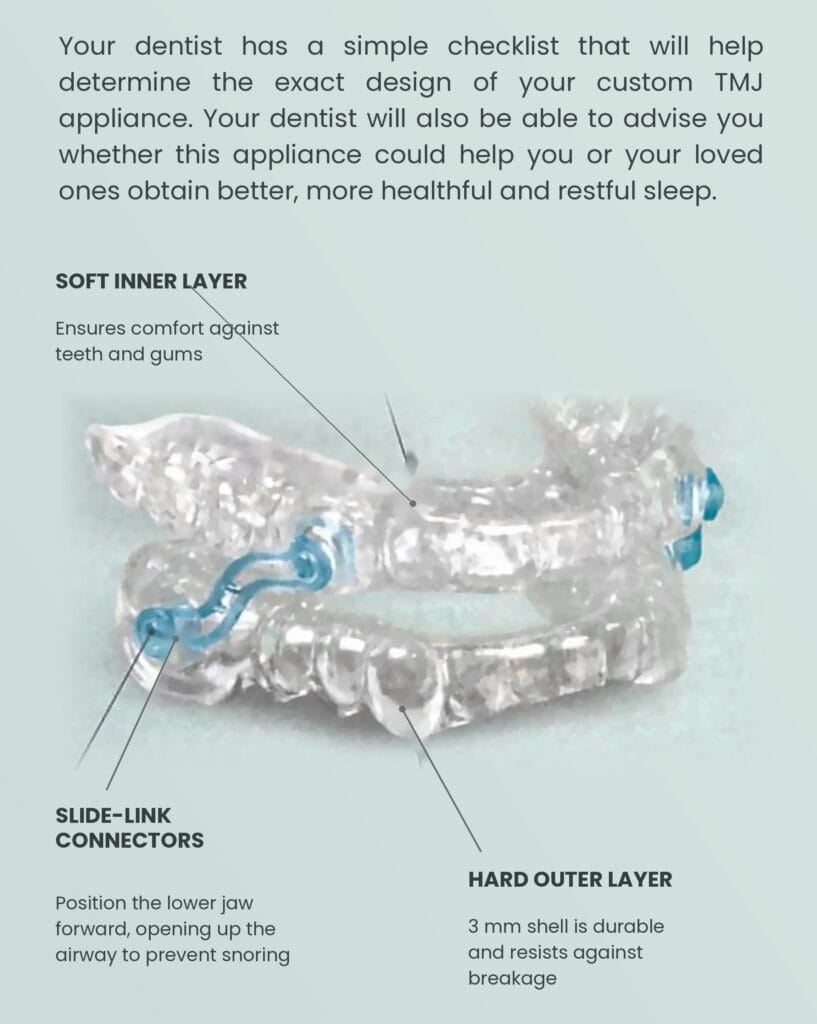
A custom oral appliance, sometimes called a night guard or splint, is the cornerstone of TMJ treatment. Unlike drugstore mouthguards, it is fitted precisely to your bite by Dr. Razavi and worn primarily at night to stop grinding and clenching, relieve pressure on the joint, and let strained muscles recover. Most patients notice a meaningful reduction in pain, headaches, and morning jaw soreness within a few weeks. Because the appliance is custom-made, it sits comfortably, stays in place, and protects your teeth from the wear that years of grinding can cause.
Bite Analysis and Adjustment
Restoring Worn or Damaged Teeth
Lifestyle and Self-Care Guidance
Because stress and habits play a large role, Dr. Razavi also reviews practical steps, soft-diet periods during flare-ups, jaw rest, heat and gentle stretching, and stress management, that support the clinical treatment.
For the small number of cases that do not respond to conservative care, or where advanced joint disease is involved, Dr. Razavi will coordinate a referral to the appropriate specialist rather than push treatment that is unlikely to help.
Do You Need a TMJ Specialist in Philadelphia?
What to Expect at Your TMJ Visit
- Evaluation. Dr. Razavi examines your jaw, bite, and the muscles around the joint, asks about your symptoms and habits, and checks your teeth for signs of grinding.
- Diagnosis. She identifies the likely source, whether it is muscle, joint, bite, or a combination, so treatment targets the real cause.
- Treatment plan. You receive a clear plan, usually starting with a custom oral appliance, with the timeline and cost laid out in advance.
- Follow-up. TMJ treatment is adjusted over time. Short follow-up visits confirm the appliance is working and let Dr. Razavi fine-tune it.
How Much Does TMJ Treatment Cost in Philadelphia?
The cost of TMJ treatment in Philadelphia depends on what your case needs, most often a custom oral appliance, sometimes combined with bite adjustment or restorative work. Because TMJ can be considered a medical as well as a dental issue, part of the treatment may be covered by medical or dental insurance. Razavi Dental reviews your specific case and coverage and provides a clear cost before treatment begins.
When to See a Dentist for TMJ
Make an appointment if you recognize any of these:
- Jaw pain or tenderness that keeps coming back
- Clicking, popping, or locking of the jaw
- Frequent headaches, earaches, or facial pain with no other clear cause
- Pain when chewing or opening wide
- Teeth that are worn, chipped, or sensitive from grinding
- Waking with a sore jaw or a partner who notices you grinding at night
Why Choose Razavi Dental for TMJ Treatment
TMJ treatment depends on understanding how the teeth, muscles, and joint work together, and that is exactly where Dr. Leily Razavi’s training is focused. She earned her Doctor of Dental Surgery from the University of Toronto, completed her residency at Albert Einstein Medical Center in Philadelphia, and practiced for over fifteen years at the University of Pennsylvania Faculty Dental Practice before founding Razavi Dental in Center City in 2008. She has been named a Philadelphia Magazine Top Dentist six consecutive years, from 2020 through 2025, and is an avid student of Spear Education, where occlusion and bite-related disorders are central. That foundation lets her approach TMJ treatment at its source rather than only its symptoms.
The practice sits on South Street in Center City and serves patients from across Philadelphia, including Queen Village, Bella Vista, Society Hill, Washington Square West, and Rittenhouse.
Tired of jaw pain? Schedule a TMJ evaluation with Dr. Razavi at Razavi Dental in Philadelphia.
TMJ Treatment FAQ
What is a TMJ disorder?
A TMJ disorder, or TMD, is a problem with the jaw joints or the muscles that move them, causing jaw pain, clicking or popping, headaches, and difficulty chewing. Most cases are related to muscle strain, grinding, or bite issues.