
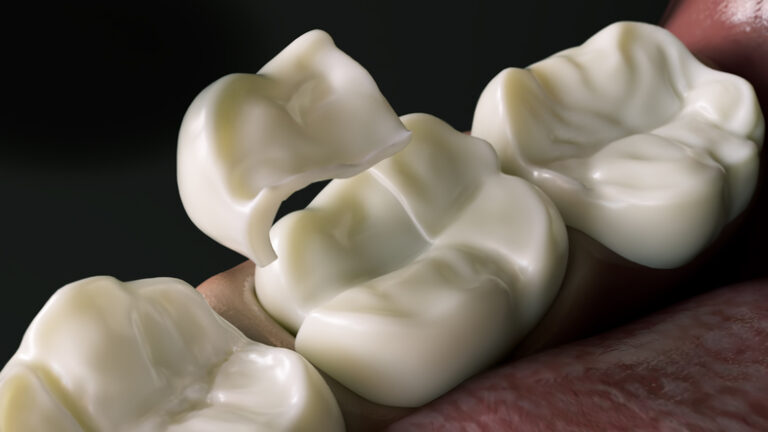
Which is Better, Dental Inlay vs Onlay?
When a tooth has too much damage for a filling but not enough to need a crown, your dentist will likely recommend a dental inlay or onlay. Both are custom-made restorations bonded directly to the tooth and significantly more durable than a standard filling. The difference comes down to how much of the tooth is affected and how many cusps need coverage.
What Is the Difference Between an Inlay and an Onlay?
A dental inlay fits within the grooves of a tooth, restoring the area between the cusps without extending over them. It is used when decay or damage is confined to the inner surface of the tooth.
A dental onlay covers one or more cusps in addition to the inner surface. It is sometimes called a partial crown because it protects a larger portion of the tooth. When damage extends to the biting surface or the outer edges, an onlay provides the coverage an inlay cannot.
An overlay is a variation that covers all cusps of the tooth, essentially replacing the entire biting surface while preserving the tooth’s roots and structure.
Dental Inlay vs Onlay: Side-by-Side Comparison
| Inlay | Onlay | |
|---|---|---|
| Coverage | Between cusps only | One or more cusps |
| Best for | Moderate inner decay | Larger or cusp damage |
| Preserves tooth structure | Yes | Yes |
| Stronger than a filling | Yes | Yes |
| Alternative to crown | Sometimes | Often |
| Number of appointments | 1-2 | 1-2 |
| Cost range | $650 – $1,200 | $900 – $1,900 |
When patients ask about the dental inlay vs onlay decision, the answer almost always comes down to how far the damage extends. A dental inlay vs onlay evaluation at Razavi Dental starts with a full exam and X-rays so Dr. Razavi can see exactly how much tooth structure is affected before recommending anything. In straightforward cases, the dental inlay vs onlay distinction is clear: damage inside the grooves means an inlay, damage reaching the cusps means an onlay. Either way, both restorations are custom-fabricated to fit your tooth precisely, shade-matched to your natural enamel, and bonded permanently in place for a result that looks and functions like your original tooth.
What Materials Are Used for Inlays and Onlays?
Inlays and onlays are made from three main materials:
Porcelain is the most common choice. It matches the natural color of your teeth and is highly resistant to staining. At Razavi Dental, porcelain restorations are custom-shaded to blend seamlessly with the surrounding teeth.
Composite resin is a tooth-colored material bonded directly to the tooth. It is less expensive than porcelain but may not last as long under heavy biting pressure.
Gold is the most durable option and has been used in dentistry for over a century. It is rarely chosen today for cosmetic reasons, but some patients prefer it for back teeth where strength is the priority.
How Long Do Inlays and Onlays Last?
With proper care, porcelain inlays and onlays typically last 10 to 30 years. Gold restorations can last even longer. The longevity depends on oral hygiene habits, whether the patient grinds their teeth, and how well the restoration was bonded at placement.
Compared to composite fillings, which typically last 5 to 10 years, inlays and onlays are a significantly longer-lasting investment.
What Are the Disadvantages of Inlays and Onlays?
Multiple appointments: most inlays and onlays require two visits. The first appointment involves removing decay and taking an impression of the tooth. The restoration is fabricated in a lab, then bonded at the second visit. Some practices offer same-day restorations using CAD/CAM technology.
Not suitable for severe damage: when a tooth has extensive structural loss, a full crown may be the better option. Your dentist will recommend whichever restoration provides the most support for the long term.
Temporary sensitivity: some patients notice sensitivity to hot or cold temperatures after bonding. This is normal and typically resolves within a few weeks.
Porcelain can chip: porcelain inlays and onlays are strong but not indestructible. Patients who grind their teeth may be advised to wear a night guard to protect the restoration.
Common Questions About Inlays and Onlays
Can an onlay fall off? Onlays can loosen over time due to wear, trauma, or adhesive failure. If this happens, your dentist can re-cement the onlay in most cases. Catching it early matters, so contact your dentist promptly if you feel any movement.
Does an onlay require a root canal? No. An onlay does not require a root canal. Root canal treatment is only necessary when damage has reached the inner pulp of the tooth. If the pulp is healthy and damage is limited to the outer structure, an onlay restores the tooth without any additional procedures.
Can you chew gum with an onlay? It is best to avoid sticky foods and chewing gum, particularly in the first few weeks after bonding. Sticky substances can place stress on the adhesive bond before it has fully set.
Is a dental inlay the same as a filling? No. A filling is placed directly in the tooth using soft material that hardens in place. An inlay is fabricated in a lab from a precise impression and then bonded to the tooth. Inlays fit more accurately, last significantly longer, and are better suited to larger areas of damage.
Inlay vs Onlay vs Crown: How to Choose
The choice between an inlay, onlay, or crown depends on how much healthy tooth structure remains.
When decay or damage is confined to the inner surface and the cusps are intact, an inlay is the most conservative option. It removes the least amount of healthy tooth structure.
When one or more cusps are affected but the tooth still has enough structure to support a partial restoration, an onlay is usually the right choice. It offers more protection than an inlay without the full removal of tooth structure that a crown requires.
When a tooth is severely damaged, cracked, or has already had a root canal, a crown is typically recommended. Crowns cap the entire tooth and provide the highest level of structural support.
Inlay and Onlay Treatment at Razavi Dental
Dr. Leily Razavi has been named a Philadelphia Magazine Top Dentist six consecutive years. Every inlay and onlay at Razavi Dental is custom-fabricated and shade-matched to your natural teeth for a result that looks and functions like your original tooth.
If you are unsure whether you need an inlay, onlay, or another type of restoration, schedule a consultation. Dr. Razavi will evaluate the extent of the damage and recommend the most conservative option that protects the tooth long-term.
Looking for a Dentist in Philadelphia?
Call (215) 996-7030 or schedule online to book your appointment at our Center City Philadelphia office.